Rapid response, quick wins, and measurable, time-bound outcomes. Philanthropy’s systems and culture are often fixated on speed. Meanwhile, civic change moves at a human pace, unfolding in the spaces between trust, conflict, memory, and backlash; persisting with both urgency and patience, unable to conform to quarterly reporting cycles or neatly packaged theories. And it almost never reveals its full impact within a two-year timeline.
With urgency and metrics as our guiding lens, funders have unintentionally simplified the reality of what civic and democratic work takes. Now, to ensure relevance and allyship in this critical moment of polycrises, those of us committed to justice and democracy must ask ourselves: are we committed to resourcing durable social change through moments of crisis, setback, and uncertainty—even when doing so challenges our long-held practices, timelines, and sense of control?
Philanthropy’s Tried and True Patterns
Philanthropy excels at funding beginnings: new innovations, emerging leaders, and pilot programs. Soon after—during the growing middle years, when organizations are building infrastructure, stabilizing leadership, and deepening relationships—we struggle to maintain our early levels of commitment. We pull away our investments at a time when wins are incremental, costs are rising, and measurement is a thing still under development; at a time when progress feels fragile rather than triumphant. And in these times of retrenchment, our movements don’t just lose money. They lose institutional memory, leadership continuity, and above all, momentum.
Stuck within these cyclical patterns, we often find ourselves looking back, asking, how, exactly, did things unravel in this way? Why did progress slow, stall, reverse? And when the consequences of our actions boomerang into fruition, we begin the cycle again, implementing our long-standing funding practices: responding via urgent interventions, administering time-bound grants, and necessitating that grantee partners shoulder the risk of annual funding gaps.
Funding The Long Arc
Throughout history, movements have made this clear: social change is long-term, long-haul, loving and careful work. It requires the laying of many bricks, and in fact, the making of bricks, and the re-laying of bricks that become broken or lie askew:
- The Women’s Suffrage Movement took more than 70 years of organized multi-class effort to secure voting rights for women—and even then, access was racially tiered, stratified, and dissonant. The fight for voting rights continues today, as organizers battle everything from ID requirements to the recent Supreme Court Decision’s decision to dismantle the last remaining powerful provision of the Voting Rights Act, which helped prevent racial discrimination in voting.
- Abolition was a multi-generation struggle spanning centuries, ultimately culminating in the 13th Amendment, passed in 1865. In the century since, organizers have led the fight to expand upon civil rights for Black Americans, combining legal challenges, mass protest, cultural work, and grassroots organizing. Wins like the Civil Rights Act formalized gains that activists had fought for across generations.
- Labor rights and the eight-hour workday emerged through decades of organizing, repression, strikes, and policy fights, the gains of which were reversed and re-won multiple times. As gig work and automation expand, labor movements continue to fight for rights within a changing economy.
- The movement for disability rights stretched across the twentieth century, advancing through persistent organizing to reframe disability from a personal to a civil rights issue. It took decades of activism to secure the Americans with Disabilities Act, which requires continued enforcement, and faces dismantling under the current administration.
Those seeking to roll back rights, too, have understood social change as a long game, pursuing explicit multi-decade strategies—building policy agendas, leadership pipelines, and coordinated funding infrastructures over 40 years, not election cycles.
Movements succeed simply because organizers—and their funders—persist. Through loss and conflict, over periods when progress was invisible or unpopular, they lay bricks. The takeaway is not that change is slow-moving by definition or necessity; rather, it is that change is cumulative, and depends on generational investments in people, programs, and infrastructure before outcomes can be measured in totality.
Why Long-Term Funding Matter for Democratic Resilience
As we witness rising authoritarianism and find ourselves at the tail-end of another cycle of retroactive repair, philanthropy must confront another oversight: our sector’s approach to treating democracy investments as episodic–election cycles, voter engagement campaigns, and crisis response. Beyond simply a system of governance, democracy is an ecosystem of participation, trust, belonging, and narrative power. It is a careful thing, which relies on independent media, cultural strategists and shared cultural vision, community-rooted organizations, leadership pipelines, legal defense and policy infrastructure, robust care systems and community safety and wellness. All of this allows people to fully participate in the world. These interlocking components require long-term nurturing and cultivation. This moment offers an opportunity to right-size our commitments. By investing for the long-haul, and across the movement ecosystem—from the grassroots frontlines to infrastructure backbones, and intermediary mechanisms—the philanthropic sector can align its giving with the long arc that justice requires.
Arcs do not bend themselves into shape. They are formed by sustained pressure, collective effort, and resources that remain present even when progress is slow or resisted. For funders, then, staying power is an ideal investment strategy, aligned with how democracy-building actually occurs.
- What would it look like to move towards decade long-investment cycles, staying rooted in place, through loss and uncertainty? To shift to long-term commitments of five, ten, fifteen, or more years?
- What shifts would we see if we paired immediate deployment with long-term commitments? If we fund infrastructure, not just intervention; deployed flexible capital that organizations could adapt as sociopolitical landscapes evolved? Funded through “quiet” periods, not only moments of great need or visibility?
- How might we offer additional, targeted support for leadership succession planning and organizational health?
At its core, funding with staying power is an act of trust, critical to the new era of philanthropy we have been building. Today, philanthropy faces a choice: will we continue to fund civic change as though it were a series of short sprints, or treat democracy as a thing to be actively and continuously built, and dedicate our lifelines—our capital, attention, and accountability—to the long arc of civic work, nurturing strategies over generations?
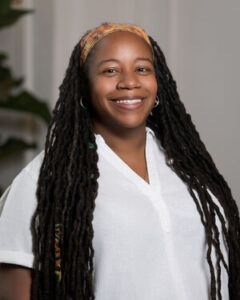
Sadé Dozan is vice president of advancement at Borealis Philanthropy, driving resources to grassroots movements shaping democracy. With 20 years of nonprofit leadership and as founder of Melanate, she advances equity-centered philanthropy and strategies to strengthen movements and philanthropic ecosystems.